

Did you know that menopause and heart health are directly connected?
From around age 45, falling oestrogen withdraws a layer of cardiovascular protection women have had since puberty. The effect is measurable: cholesterol rises, blood pressure climbs, fat redistributes to the abdomen, and glucose control weakens.
Heart disease, not breast cancer, becomes the leading cause of death for women after this point. The change is real, and it is largely modifiable.
What Oestrogen Does for Your Heart Health
Oestrogen is not only a reproductive hormone. It keeps blood vessels flexible, helps regulate cholesterol, and limits fat building up in artery walls. When production falls during perimenopause, that support withdraws.
This is why heart disease risk after 45 climbs in a way it never did in your thirties. It is not ageing on its own. It is a specific hormonal shift with specific consequences for your heart health, and most women were never told it was coming.

Cardiovascular risk in women tracks low until the menopause transition, then rises steadily.
Menopause and Heart Health: The Five Markers That Shift
Research on cardiovascular risk during perimenopause shows a consistent pattern. American Heart Association analysis of more than 9,000 women found perimenopausal women were twice as likely to score poorly on cardiovascular health measures, driven by a handful of changes:
- LDL cholesterol rises, often sharply in the year around your final period
- Blood pressure trends upward, sometimes for the first time in your life
- Insulin sensitivity falls, raising blood sugar and metabolic syndrome risk
- Body fat moves to the waist, and fat deposits build around the heart itself
- Sleep fragments from night sweats, which independently raises blood pressure
Five markers, one window. That is what makes menopause and heart health a single conversation rather than two separate ones. The risks compound, so they have to be managed together.

The five markers worth baselining before, during and after the transition
Why 45 Is the Line for Heart Disease Risk
If your final period arrives before 45, longer oestrogen deficiency means a higher lifetime coronary risk.
Early menopause is a cardiovascular flag, not only a fertility one, and it deserves a proper clinical conversation rather than a shrug.
Researchers now describe perimenopause as a window of opportunity. Acting on cholesterol, blood pressure and glucose during this phase carries more weight than the same action ten years later.
Recognising cardiovascular risk during perimenopause early is what makes prevention actually work.
The Menopause and Heart Health Gap Is Not Equal Everywhere
In the UK, women’s cardiac symptoms are still more likely to be misread or dismissed, and menopause care remains uneven across the NHS.
Across sub-Saharan Africa, the gap is wider: hypertension in women is substantially undiagnosed, and menopause rarely enters any cardiovascular screening conversation at all.
For African women and women across the diaspora, this compounds. Higher baseline hypertension meets lower rates of detection at exactly the life stage when heart disease risk after 45 begins to accelerate.
That is not a personal failure. It is a system that was never designed with women in mind.
Protecting Your Heart Health After 45
Four things move the needle, and none of them requires permission.
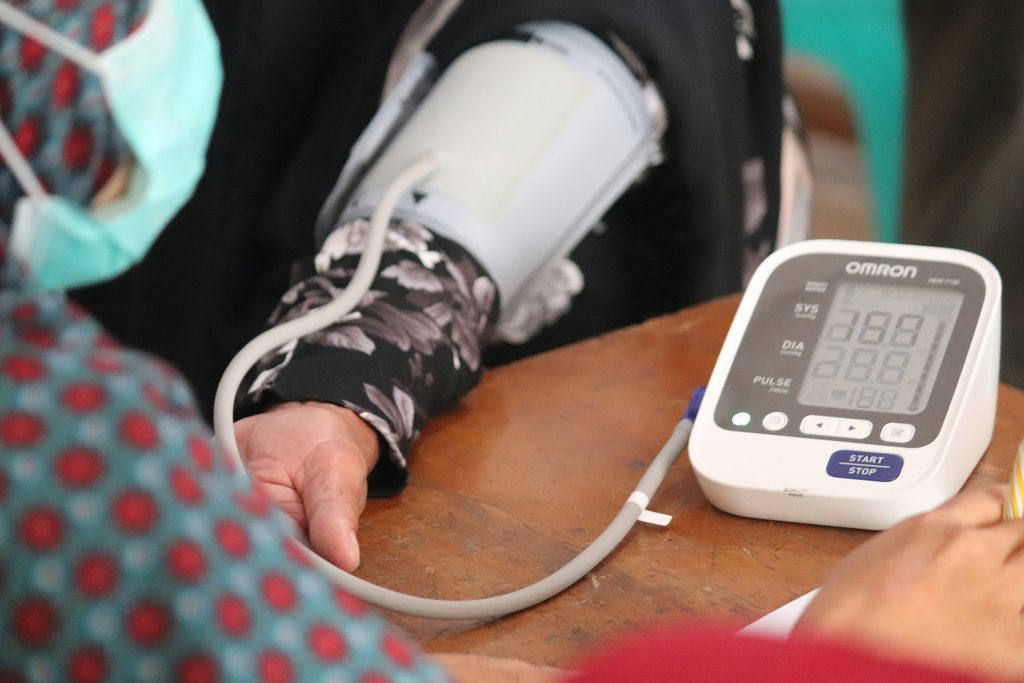
- Get your numbers. Blood pressure, a full lipid panel, HbA1c. Baseline them now and repeat annually. You cannot manage cardiovascular risk during perimenopause that you have never measured.
- Train for your heart, not the scale. Strength work twice a week protects insulin sensitivity and lean mass. Aerobic work protects vessel function. Both matter more now than at any earlier point.
- Eat for lipids and blood sugar. Fibre, oily fish, olive oil, legumes, far less ultra-processed food. DASH-pattern eating has the strongest evidence base for heart health here, and it is not a punishment diet.
- Ask about HRT properly. Started within ten years of menopause and before 60, hormone therapy can reduce coronary risk for many women.
It is not right for everyone, and oral formulations carry a small clot and stroke risk. Ask for an individual assessment, not a headline.
Heart disease risk after 45 is not a sentence. It is information, arriving at the exact moment you can still act on it. Women who track their markers, train with intent, and refuse vague answers from clinicians change their own trajectory.
Menopause and heart health belong in the same conversation, every time, because the next decade of your cardiovascular life is being decided right now.
One Response