Rest and recovery are not the same thing, and only one of them restores you
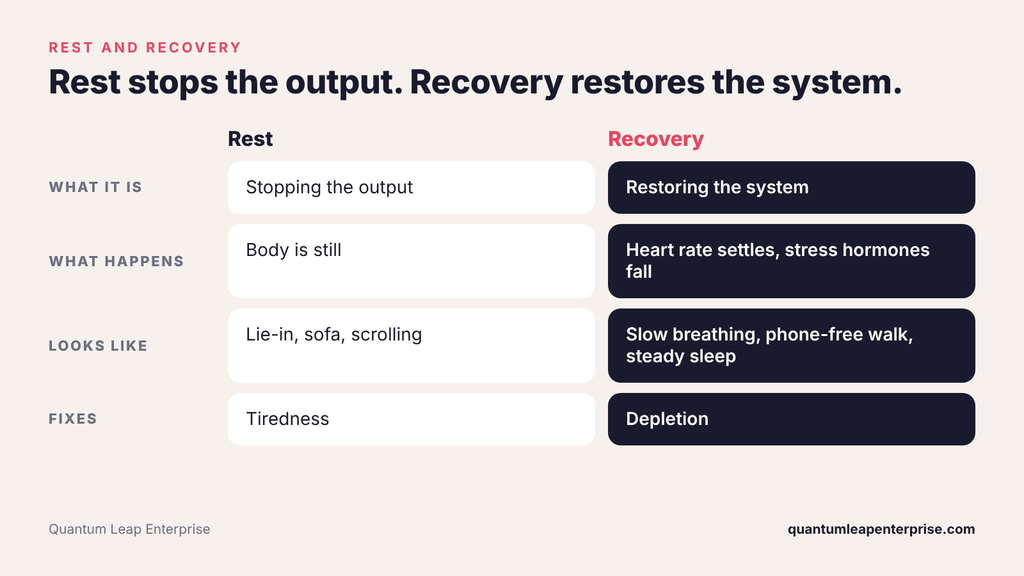
If you are still tired after resting, it is usually because rest and recovery are not the same thing. Rest stops the output. Recovery restores the system.
A day off restores a tired person, but it does very little for a depleted one, because depletion lives in your nervous system, your hormones and your nutrient stores, not just your diary.
Rest and recovery: what is the difference?
Rest is the absence of demand: a lie-in, a cancelled plan, an evening on the sofa. Recovery is the active process of your body returning to baseline. Your heart rate settles, stress hormones fall, tissues repair and energy stores refill.
Rest creates the conditions for recovery. It does not guarantee it. When you treat rest and recovery as the same thing, you can take every weekend off and still feel tired all the time.
Why your nervous system keeps burning energy
Under chronic stress, your body stays in a state of alert. Cortisol and adrenaline keep your heart rate higher, your muscles slightly braced, and your mind scanning for the next demand.
That state is expensive. It burns energy continuously, even when you are sitting still. You can usually feel it. You lie down, but your mind runs through tomorrow’s list. You sleep, but wake at 3 am.
Your resting heart rate creeps up and your heart rate variability, a marker of how easily your body shifts into calm, drops.
It is like leaving a car in neutral with your foot pressed on the accelerator. Nothing is moving, yet the fuel keeps draining.
That’s the most common reason you are still tired after resting, and why rest and recovery come apart. The body stopped. The nervous system did not.
Rest stops the output. Recovery restores the system.
Why scrolling on the sofa does not count
Scrolling feels like rest because your body is still. Your brain, however, is processing a constant stream of new information, headlines, notifications and other people’s lives.
Each one asks for a small judgement. Late at night, screen use can also delay sleep and shorten the deep sleep your body relies on for repair.
Passive rest with a phone in your hand is often just low-level work in a comfortable position. Real rest and recovery need your nervous system to stand down, not simply your legs.
What real rest and recovery require
Recovery is something you do, not something you wait for. These are the foundations:
A deliberate downshift. Ten minutes of slow breathing with a longer exhale, or a walk outdoors without your phone, signals safety to your nervous system faster than an hour of scrolling.
A consistent wake time. Regular sleep timing does more for energy than an occasional lie-in, which can leave you groggier.
Enough fuel. Skipped meals and low protein keep stress hormones elevated. Eat regularly, especially earlier in the day.
The right dose of movement. Gentle movement restores. Punishing workouts on an empty tank add to the load.
Less load, not just a pause. If the same demands are waiting on Monday, the weekend was a pause, not recovery.
When it is physical: hormones, iron, thyroid and vitamin D
If you have been tired all the time for more than a few weeks despite better rest and recovery habits, look at the physical picture.
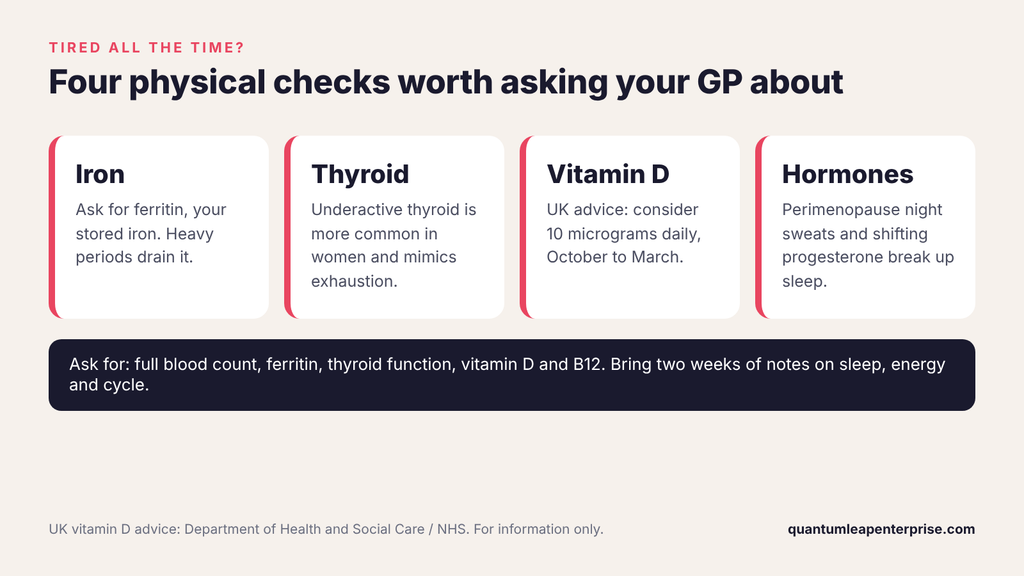
Iron is the first check for many women, particularly with heavy periods, and a ferritin test shows your stored iron, not just today’s level.
Thyroid problems, especially an underactive thyroid, are more common in women and can mimic exhaustion and low mood.
Vitamin D matters, especially in temperate climates, where shorter winter days dramatically reduce natural sunlight exposure.
Global health guidelines advise everyone to consider a daily 10 microgram supplement from October to March.
Hormones play their part too: in perimenopause, night sweats and shifting progesterone can fragment sleep, so you are still tired after resting no matter how early you go to bed.
Ask your GP about a full blood count, ferritin, thyroid function, vitamin D and B12. Bring a two-week note of your sleep, energy and cycle.
Four physical checks if you are tired all the time.
Build recovery into your day
Being tired all the time is not a personal failing, and it is not something you fix with one good weekend. Rest and recovery work through small, repeated signals that tell your body it is safe to stand down and refill.
A daily ritual is one of the simplest of those signals. 777 Aura is a Scottish-crafted elixir designed to be drunk with intention: a two-minute pause before the day begins making demands. Find your ritual at 777aura.com
This article is for general information and is not a substitute for medical advice. If you are worried about your symptoms, speak to your GP.
We use cookies to ensure that we give you the best experience on our website. If you continue to use this site we will assume that you are happy with it.